

Animation with Unreal Engine
Time limit: 3 days
Sorry! The enrolment period is currently closed. Please check back soon.
Full course description

Learn to Make Things Move: Real-Time Animation in Unreal Engine
This introductory course turns Unreal Engine into a real-time animation studio. Instead of diving into complex rigs, learners focus on the essentials: pose, timing, movement, and story. Using beginner-friendly workflows, they animate props, lights, simple characters, and cameras inside a fully lit Unreal scene.
Working in a studio-style environment, participants explore how motion communicates weight, mood, and intention. They block out action, refine timing with Sequencer, and build short animated beats that feel clean, readable, and deliberate — all with real-time feedback.
No prior animation experience is required. By the end, each learner completes a 10–20 second animated micro-scene — a polished sequence proving they can translate ideas into motion inside Unreal Engine.
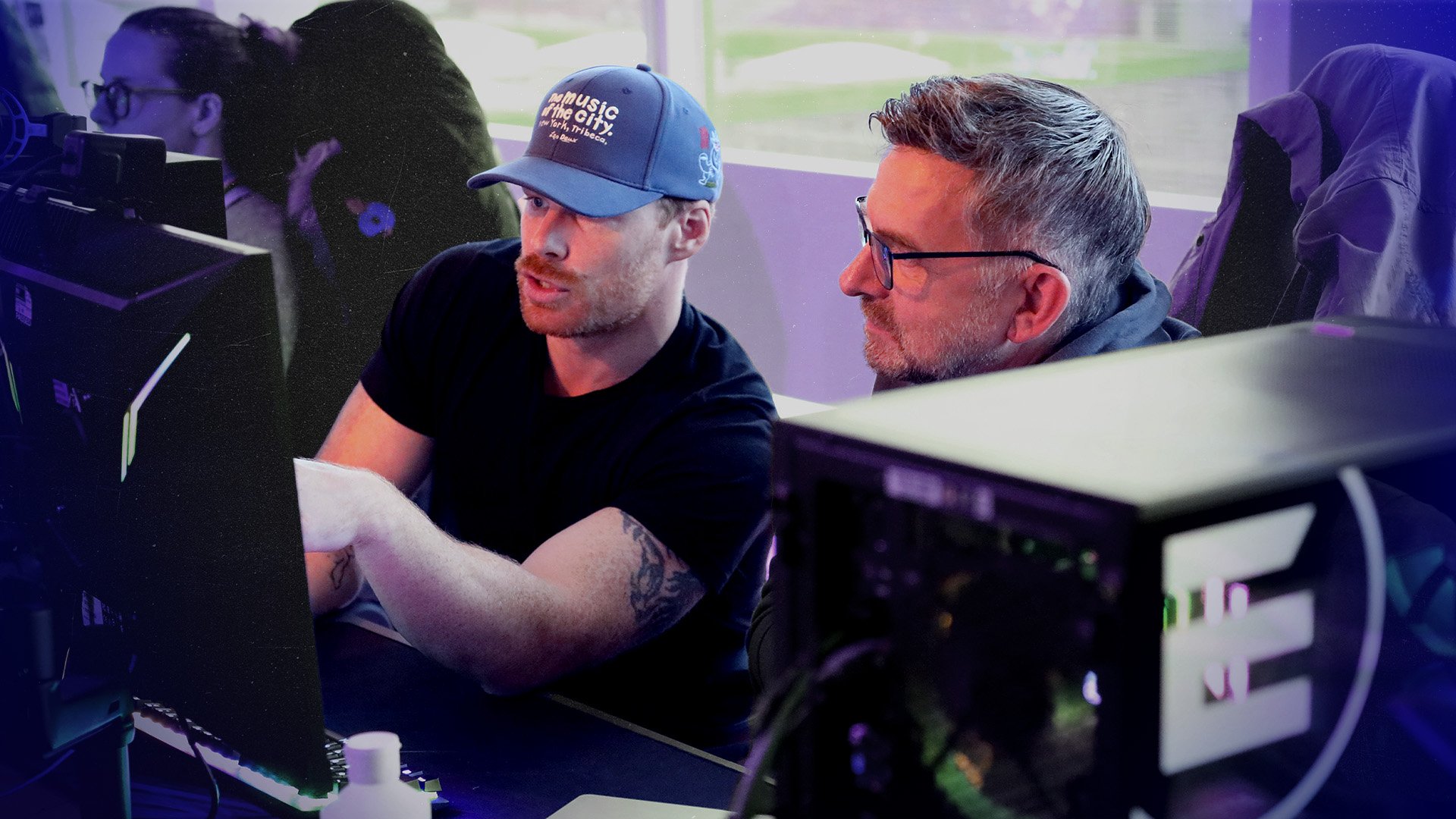
A 10–20 Second Animated Moment Built in Unreal
Learners create a complete 10–20 second animated sequence — a small moment where props move, lights react, and a simple character performs a clear action, guided by cinematic camera work.
On Screen
A readable micro-story: something shifts, reacts, reveals — and ends on a strong, intentional final frame.
Under the Hood
Built entirely with Sequencer + keyframing: animated transforms, lighting cues, character actions, and clean camera movement.
The result is small — but transformative. Their first real animated sequence inside Unreal Engine.
Learning Experience: From First Keyframe to Finished Beat
Learners follow a guided animation workflow, starting with simple movement tests and building toward a complete micro-story.
Motion Fundamentals
Learners test timing, easing, spacing, and arcs by animating props and lights — building intuition for how movement feels.
Sequencer Basics
Using Sequencer, learners animate transforms, fade lights, time events, and shape a beat across a visual timeline.
Simple Character Motion
Learners apply starter animations or basic posing to give a character a short action or reaction inside the scene.
Camera & Export
Learners shape simple camera moves, refine timing, and render their animated sequence as a final video.
The course runs as a hands-on studio, encouraging experimentation, feedback, iteration, and discovery through motion.
Learning Journey: Four Constructivist Pillars
The journey is built around four pillars — forming a foundation that helps learners understand animation not as a toolset, but as a way of seeing.
Course Outcomes: What Learners Leave With
This course sets a foundation — a first confident step into animation inside Unreal Engine. Learners finish with a working knowledge of real-time animation and a portfolio-ready clip.
Core Outputs
- 10–20 second animated sequence rendered from Unreal.
- Readable motion on props, lights, and a simple character.
- Clear, cinematic camera movement.
Supporting Artefacts
- 3–5 hero frames exported from the sequence.
- A simple beat sheet or shot breakdown.
- A one-sentence logline for their animated moment.
Learners leave not as experts, but as animators who have already made something real — and know exactly how to keep going.